
Nor’easter Water Damage: When to Call a Restoration Crew
Not every wet floor after a storm needs a restoration crew. Some do, and quickly. Here is how to tell the difference in the first few hours, while the choice still matters.
Sherlock Holmes Cleaning · Storm season guide
The storm is over. The water is not.
A nor’easter rarely floods a Cape Cod house the way a hurricane does on the news. It does something quieter. It pushes rain sideways for a day or two, into window frames, under shingles, past tired flashing and down the inside of walls. By the time a stain shows on the ceiling, the water has usually been travelling for hours.
That is why the question after a storm is not only how much water you can see. It is where the water came from, how clean it is and how long it has been sitting. Those three things decide whether a towel and a fan are enough, or whether the house needs moisture meters and commercial drying equipment.
First, know where the water came from
Restoration crews sort water by how contaminated it is, because that decides what can be dried in place and what has to come out. The industry standard groups it into three categories.
Clean water comes from a supply line, a burst pipe or rain that came straight through a window. Caught early, carpet, pad and drywall can often be dried where they are. Gray water carries some contamination, such as a washing machine overflow or rain that ran across a dusty attic or crawlspace first. Black water is heavily contaminated: storm surge, rising groundwater or a sewage backup. Porous materials it touches, such as carpet pad and the bottom of the drywall, generally have to be removed.
Clean water does not stay clean, either. Left for a day or two in a warm house, it picks up whatever it soaks through and starts to behave like gray water.
Three ways a nor’easter gets inside
Most storm water damage on the Cape arrives by one of three routes. Each one leaves different clues.
Wind-driven rain
Rain pushed sideways finds its way past window trim, door thresholds and siding joints. Look for wet sills, swollen trim and stains that start at the top of a wall and run down.
Ice dams
Later in the season, snow melts on a warm roof and refreezes at the cold eaves. Meltwater backs up under the shingles and drips into exterior walls and ceilings, often well away from the eave.
Surge and groundwater
Low-lying and waterfront homes take water from below: through the foundation, the slab or the bulkhead door. That is flood water, and both the cleanup and the insurance treat it differently.
Dry it yourself, or call a crew
A rough guide. When in doubt, the cost of an inspection is small next to the cost of mold behind a finished wall.
Usually fine to handle yourself
- A small puddle of clean rainwater on tile, vinyl or sealed hardwood
- A damp area rug you can carry outside and dry in the sun
- Wet towels and stored items in a dry, unfinished space
- Anything that will be completely dry within a day with fans running
Time to call a restoration crew
- Water under laminate or hardwood, or carpet pad that squelches underfoot
- A ceiling stain that is growing, sagging or dripping
- Any water from outside rising through a foundation or slab
- Water that reached outlets, the electrical panel or appliances
- A musty smell that shows up two or three days after the storm
- More than one room affected, or a finished basement
The first hours decide the bill
Why speed matters
Mold does not need much. The EPA advises drying water-damaged materials within 24 to 48 hours to prevent mold growth, and a closed-up seasonal house in a humid coastal climate gives it a head start. Every hour that drywall, insulation or subfloor stays wet raises the odds that drying turns into tear-out.
That is also why fans from the hardware store often disappoint. They dry the surface you can see. Professional drying uses moisture meters to find water inside walls and under floors, targets it with air movers and dehumidifiers sized to the space, and keeps taking readings until the materials are back to a normal dry level.
What to do before anyone arrives
Turn off power to the affected area if you can do it safely from a dry spot. Stop the source if it is a pipe. Take photos and video of everything before you move it, because your insurer will want to see the damage as you found it. Then lift furniture off wet carpet onto blocks or foil, and move rugs, books and paperwork somewhere dry.
A note on insurance. Standard homeowner policies usually treat sudden water from inside the house, like a burst pipe, very differently from flood water rising from outside, which typically needs separate flood coverage. Call your agent early and ask which applies before any materials are thrown away.
We handle water damage in Hyannis, Falmouth, Barnstable and across Cape Cod. See how our water damage restoration service works, or check your town. If the water is in a basement, our guide to the first 24 hours after a basement flood walks through it step by step.
Storm water damage: common questions
How fast should water damage be dried?
As fast as possible. EPA guidance is to dry water-damaged materials within 24 to 48 hours to prevent mold growth. The sooner drying starts, the more can be saved rather than replaced.
Can wet carpet be saved after a storm?
Often, if the water was clean and drying starts quickly. The pad underneath is usually replaced, because it holds water like a sponge. Carpet soaked by flood or surge water is generally removed.
Is nor'easter damage covered by insurance?
It depends on how the water got in. Rain coming through storm damage to the roof is often treated differently from rising flood water, which usually needs separate flood coverage. Your agent is the only one who can confirm what your policy covers.
How long does professional drying take?
Most structural drying takes several days, with readings along the way to confirm progress. Dense materials like hardwood and plaster take longer than drywall and carpet.
What is the musty smell after a storm?
Usually moisture trapped somewhere you cannot see: inside a wall, under flooring or in carpet pad. A smell that appears days after a storm means that area did not dry, and it is worth checking with a moisture meter.
Water where it should not be?
Tell us what happened, which rooms and your town. We will tell you honestly whether it needs a crew, and give you a written price if it does.

The Sherlock Holmes Cleaning team
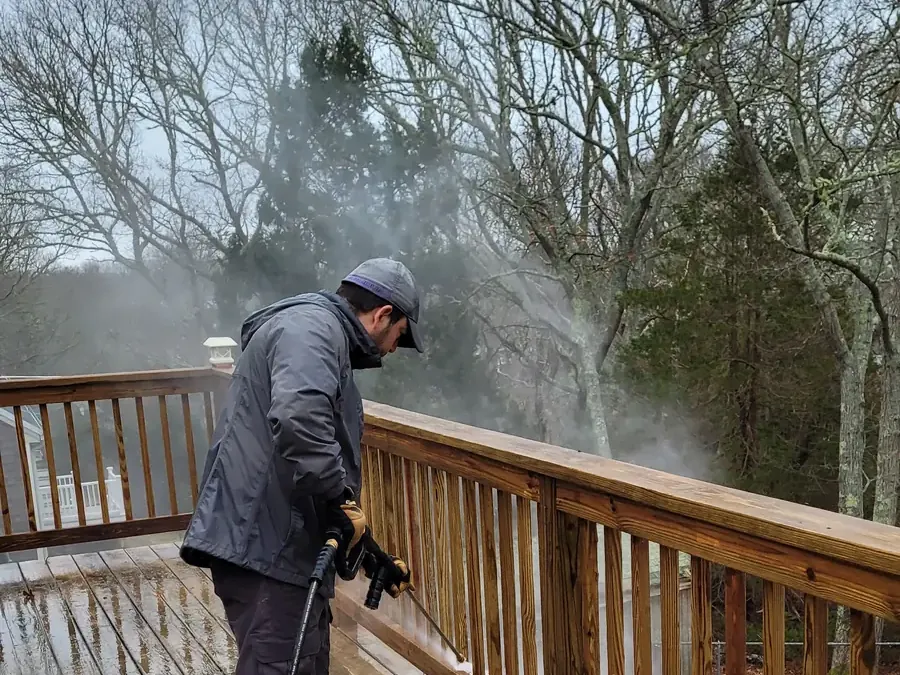
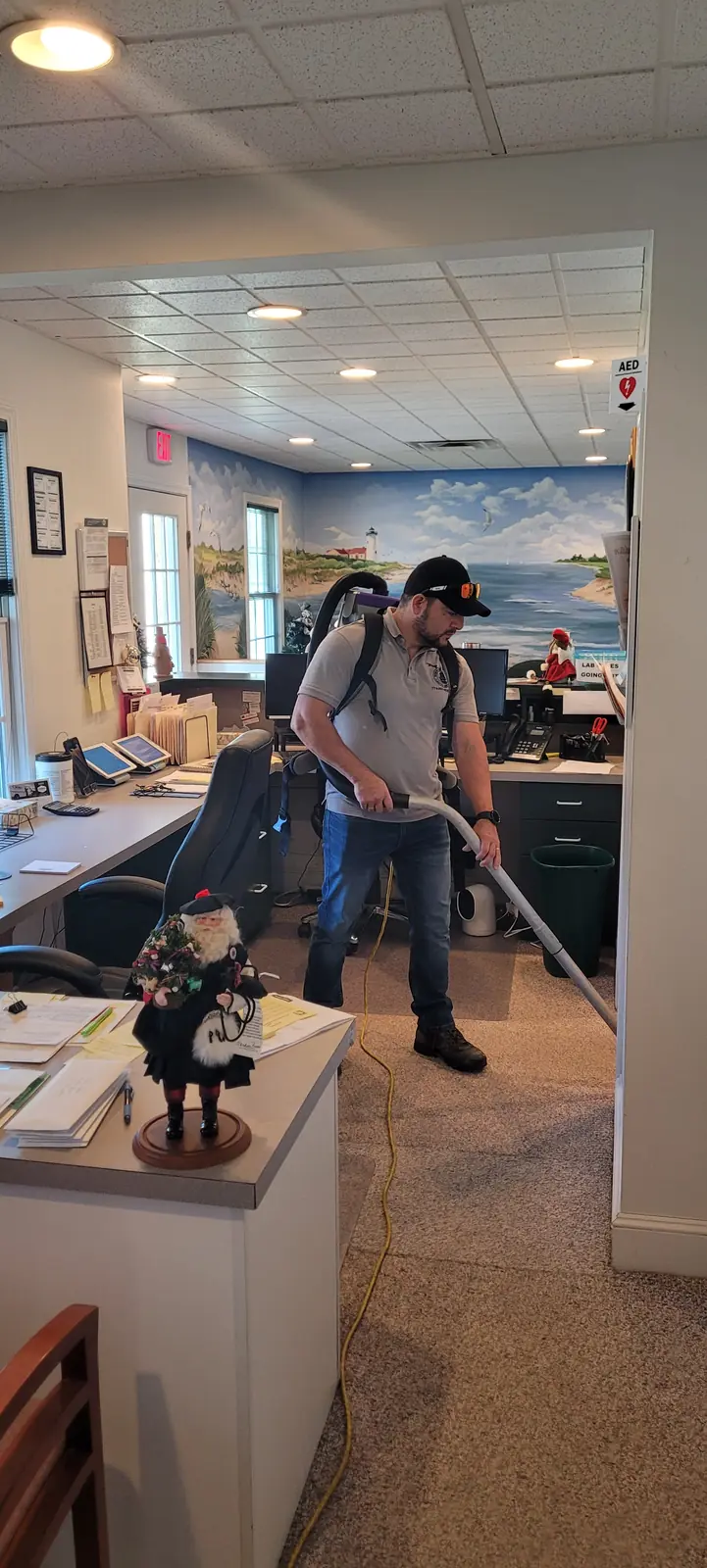
Everything here comes from the crews doing the work, not from a copywriter. We started by cleaning and disinfecting businesses during the pandemic, then reinvested in carpet, upholstery, power washing and restoration equipment. Today we clean houses, seasonal rentals and businesses from Bourne to Provincetown, with insured, background-checked crews and a written price before anyone starts.
Nine services, one crew, the whole Cape
Keep reading
September 10, 2026
Closing Up a Seasonal Home: What to Clean Before You Leave
September 13, 2026
Salt Air and Sand: Why Cape Cod Carpets Wear Out Faster
September 21, 2026